
Explainers
A short video, a concept worth knowing and posters to share.

Is the night shift a toxin?
In 2019 the cancer agency IARC kept night shift work in Group 2A, “probably carcinogenic to humans”. The groups rank how strong the evidence is, not how big the risk is. Red meat and very hot drinks sit in 2A too.
Source: IARC Monographs, volume 124, night shift work.
Read the fact check →The healthy worker effect
Two 2026 papers come from the same workforce, the nurses and nursing assistants of Region Stockholm, and seem to contradict each other. In one, those who worked nights only received more repeated prescriptions of anxiolytics and antidepressants than those who worked days only (hazard ratio 1.39; 1.32–1.47). In the other, those who worked shifts with nights had fewer medically certified absences for common mental disorders (0.80; 0.72–0.89).
The authors of the second point to an explanation: healthier people may, from the outset, be the ones who end up on night shifts. This is the healthy worker effect; in its ‘survivor’ form, a methodological review describes it as a set of selection and confounding mechanisms that vary over time. This issue has more examples: in the Danish injury cohort, the authors list selection among the possible explanations, and in a hospital in Mallorca, the better cardiovascular profile of night workers ceased to be significant once age and sex were taken into account, except for physical activity.
In practice: faced with a ‘protective’ result for nights, it is worth asking who chose that shift, who left it and why. And an outcome that depends on taking sick leave does not measure the same thing as one that depends on a prescription.
Sources
- 6Nabe-Nielsen K, Aagaard A, Larsen AD, et al. Permanent night work and risk of injuries: A register-based cohort study using payroll data. Scand J Work Environ Health 2026;52(4):415-424. doi 10.5271/sjweh.4291 · PMID 41983679
- 50Addo S, Nilsson T, Gustavsson P, et al. Shift work and prescriptions of anxiolytic and antidepressant drugs among healthcare workers in Region Stockholm: a prospective cohort study. Scand J Work Environ Health 2026 (online, 2026-09-08), 4327. doi 10.5271/sjweh.4327 · PMID 42710048
- 51Nilsson T, Brulin E, Härmä M, et al. Shift work and medically certified sickness absence due to common mental disorders among nursing staff: a prospective cohort study. Eur J Public Health 2026;36(5):ckag163. doi 10.1093/eurpub/ckag163 · PMID 42742568
- 52Brown DM, Picciotto S, Costello S, et al. The healthy worker survivor effect: target parameters and target populations. Curr Environ Health Rep 2017;4(3):364-372. doi 10.1007/s40572-017-0156-x · PMID 28712046
- 53Alou-Soler MA, Galmes-Panades AM, López-González ÁA, Yañez AM, Bennasar-Veny M. Relationship of rotating-shift work with lifestyle and health status of hospital employees. PLOS Glob Public Health 2026;6(8):e0006956. doi 10.1371/journal.pgph.0006956 · PMID 42616748

Posters six screens on quick returns
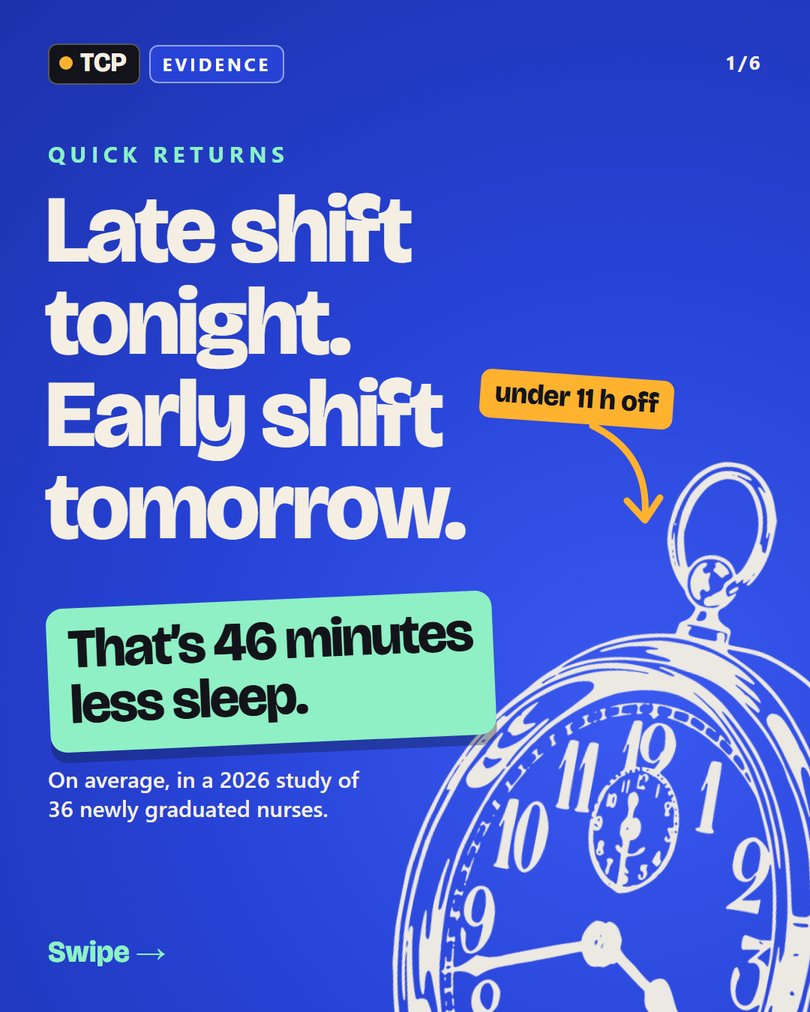
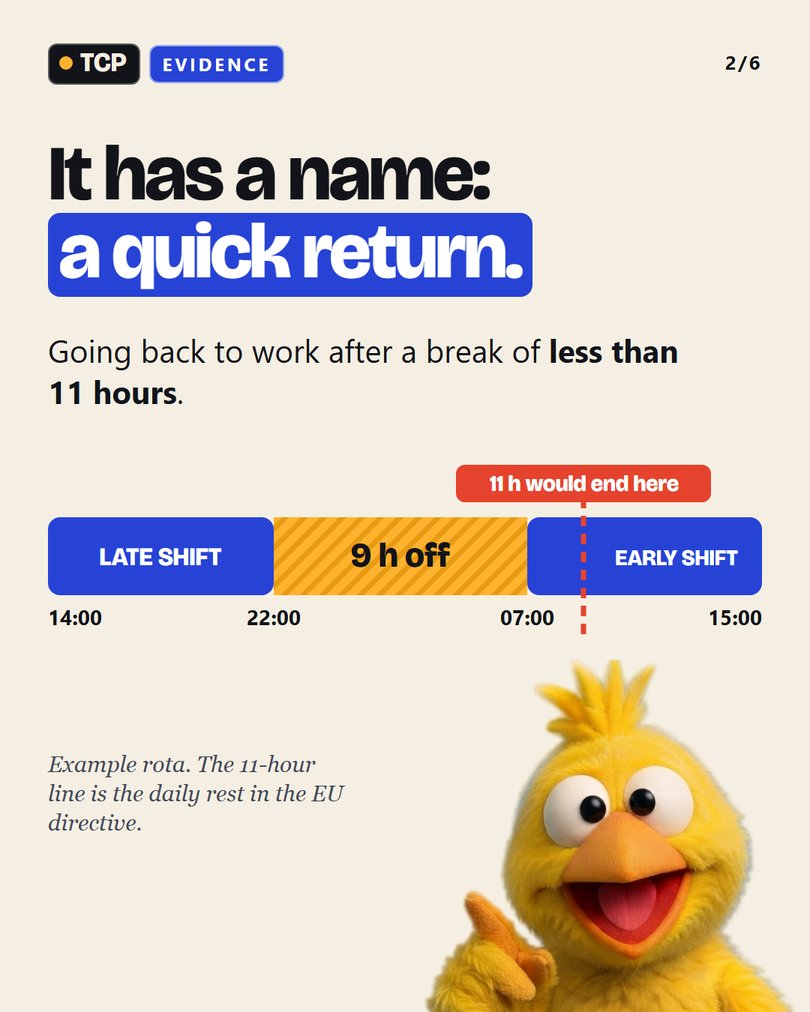
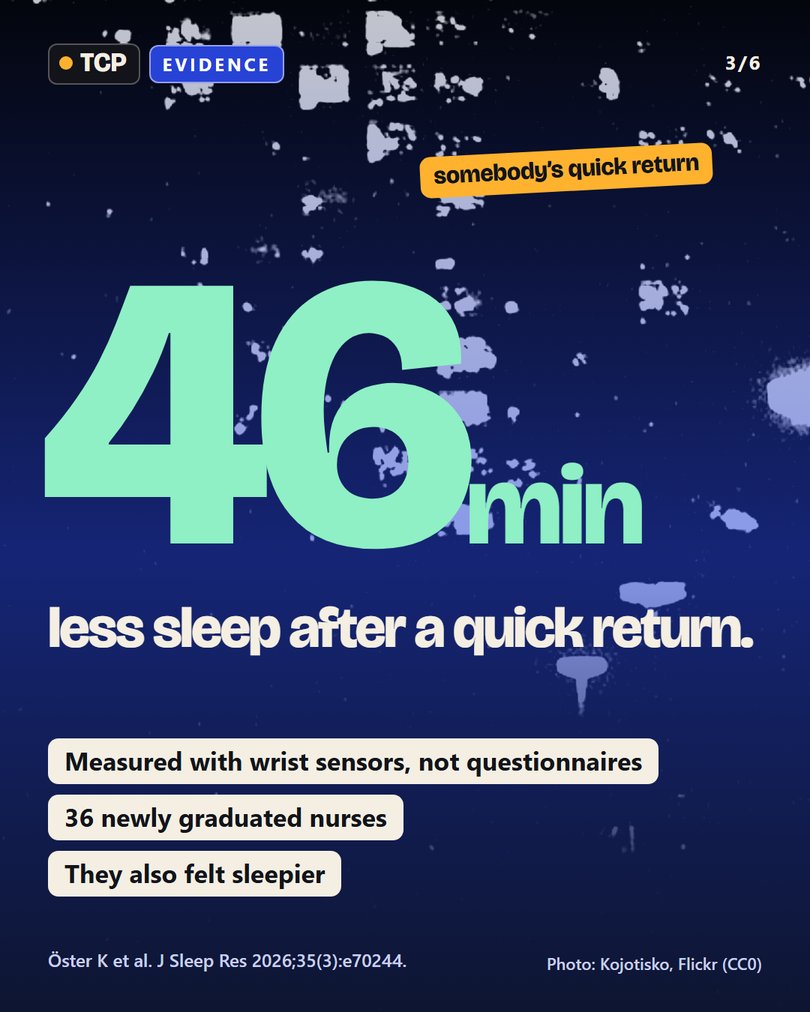
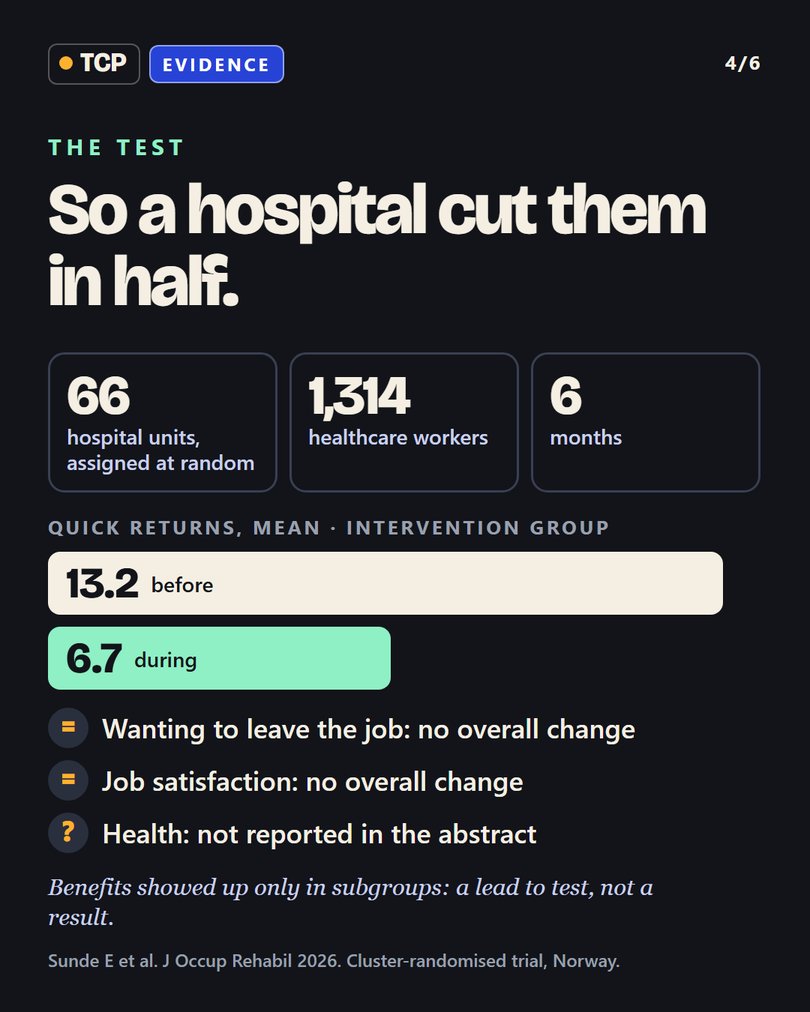
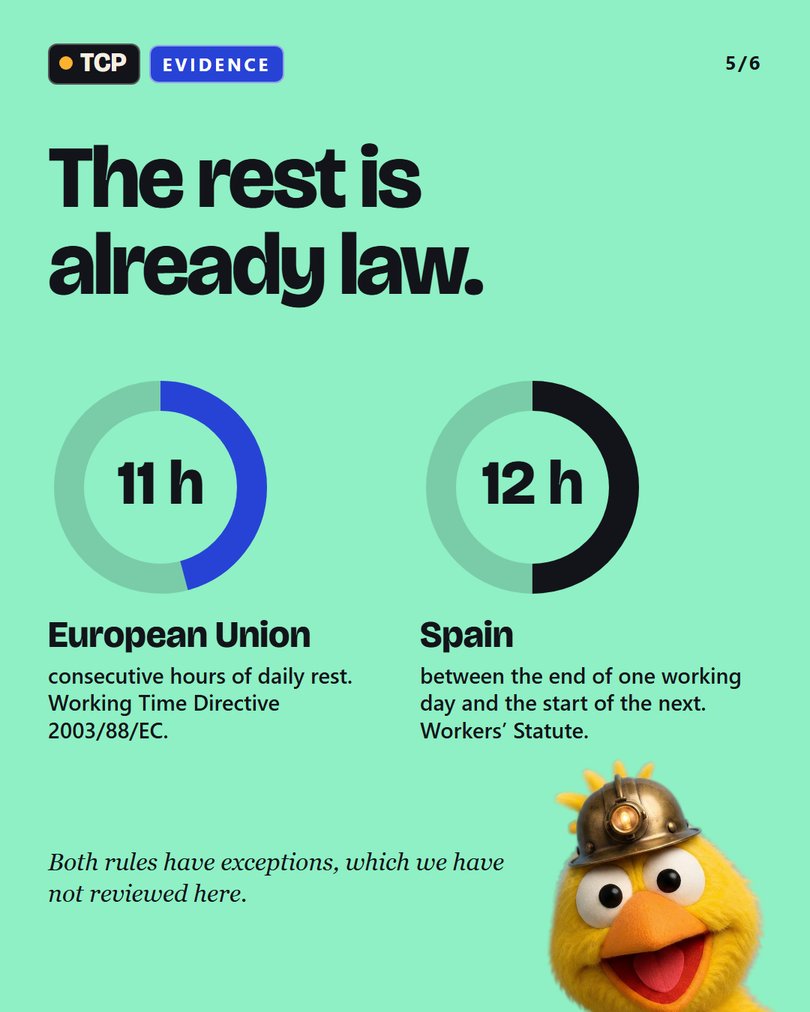
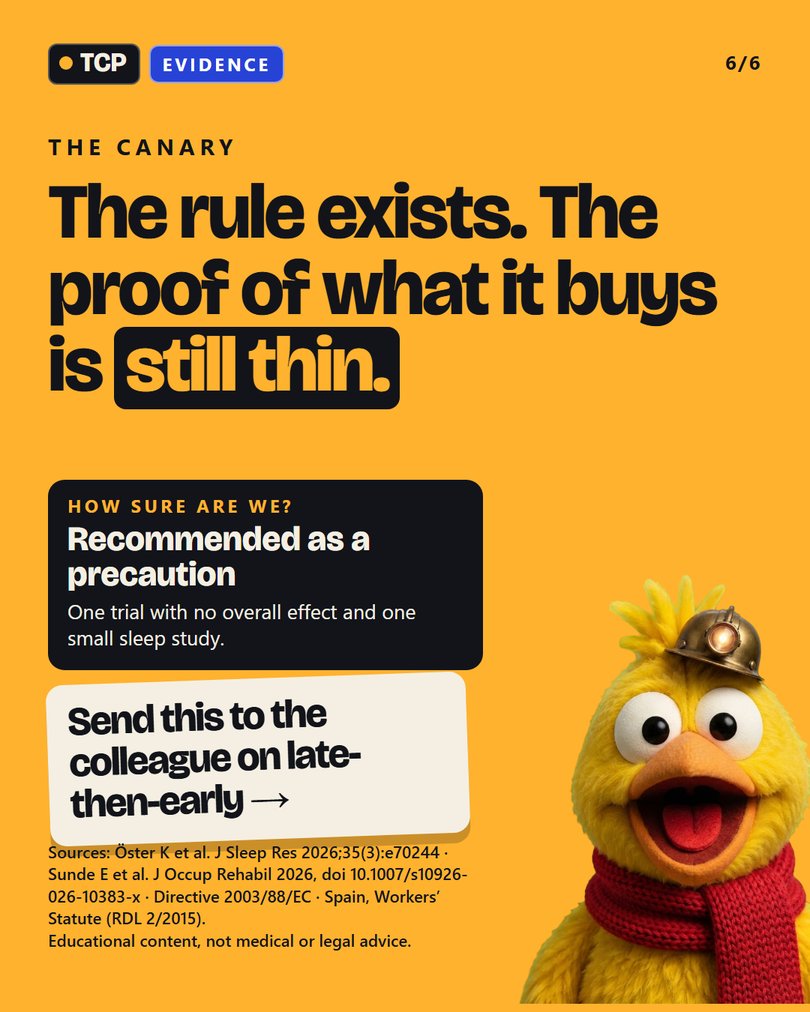
Sources: Öster K et al., J Sleep Res 2026;35(3):e70244. Sunde E et al., J Occup Rehabil 2026, doi 10.1007/s10926-026-10383-x. Directive 2003/88/EC. Spain, Workers’ Statute. The full story: Halving quick returns between shifts did not, overall, change the intention to leave the job.